New paper: The Open Veins of Algorithmic Auditing
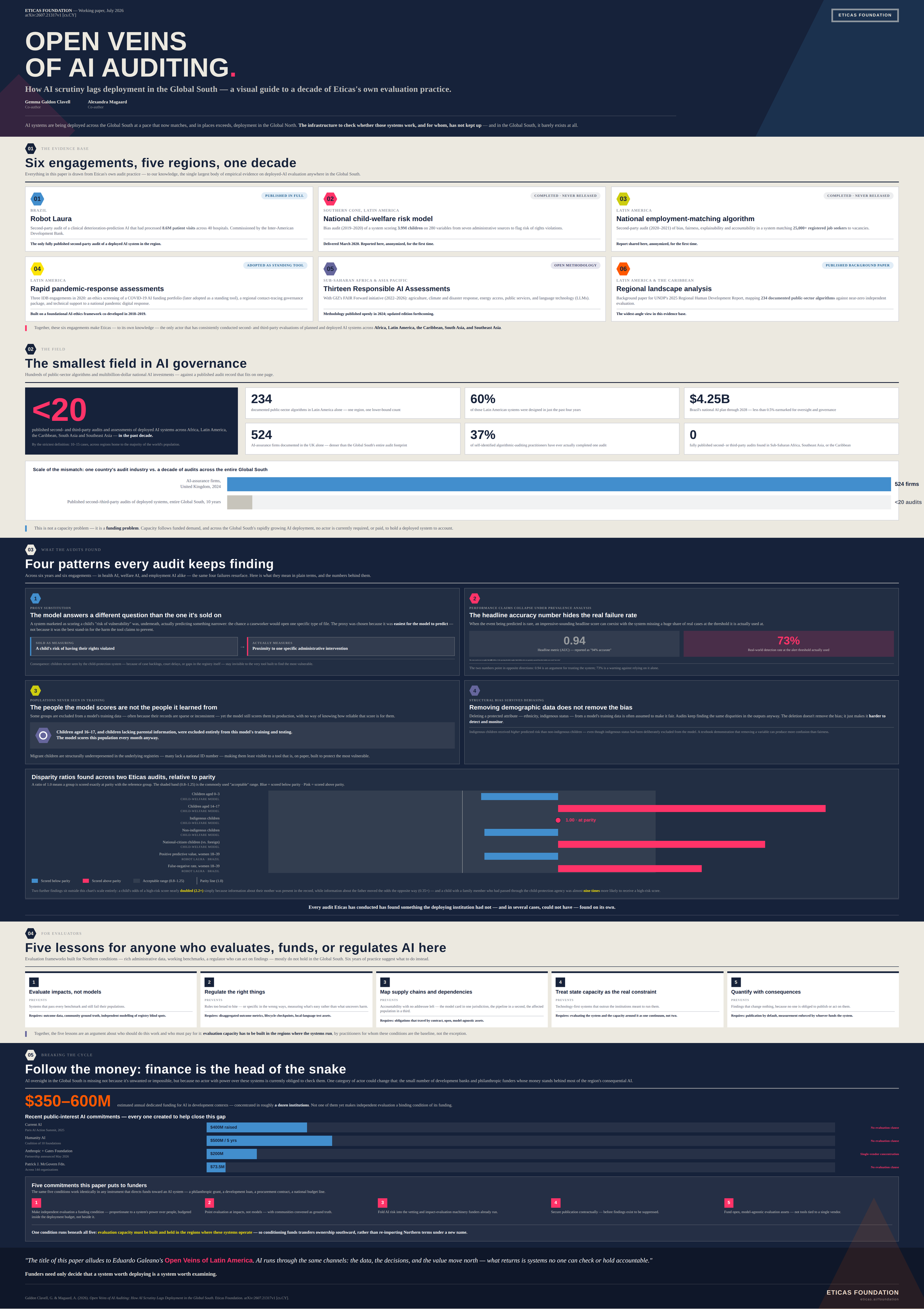
Our new paper — Open Veins of AI Auditing — documents how AI scrutiny is lagging deployment across the Global South: a child welfare algorithm scoring 3.9 million children on 280 variables, whose headline 0.94 AUC score concealed a real-world detection rate of just 73%, and that still penalized Indigenous and migrant children after the variables meant to protect them were stripped from the model; a Brazilian clinical deterioration system processing 8.6 million patient visits that systematically underestimated risk for younger women; and an evaluation gap so wide that fewer than twenty independent algorithmic audits have been published across the entire Global South in a decade, against hundreds of deployed public-sector systems and billions in government AI investment — compared to 524 AI assurance firms in the UK alone.
This paper gives funders and policymakers the evidence that the accountability gap in AI evaluation is not a technical problem but a funding one, and a concrete blueprint for closing it: making independent evaluation a condition of funding, not an afterthought.
Open Veins of AI Auditing: How AI Scrutiny Lags Deployment in the Global South